If you are looking for a Greater Phoenix community that feels scenic, established, and a little removed from the usual Valley pace, Fountain Hills tends to stand out fast. You get the famous fountain, mountain views, trail access, and a calendar of local events, all within practical reach of Scottsdale and Phoenix Sky Harbor Airport. For buyers planning a move, a second home, or a lifestyle change, it helps to know what daily life here really feels like. Let’s dive in.
What makes Fountain Hills unique
Fountain Hills is a master-planned town in Maricopa County that was established in 1970 and incorporated in 1989. According to the Town of Fountain Hills community information, it covers about 24 square miles and sits east of Scottsdale, with listed drive times of about 15 minutes to Scottsdale and 28 minutes to Phoenix Sky Harbor Airport.
That location gives you an interesting balance. Fountain Hills feels buffered by open desert and surrounding land, yet it still keeps you connected to the East Valley for work, dining, shopping, and travel. The town also borders McDowell Mountain Regional Park, which adds to the scenic, outdoor-oriented setting described in the community profile.
Another thing that shapes the experience here is the terrain. Elevation ranges from about 1,520 feet at the fountain to 3,000 feet on Golden Eagle Boulevard, which helps explain the hillside streets, changing views, and strong connection to the surrounding desert landscape.
The fountain sets the tone
The town’s visual identity starts with its namesake landmark. The official town history says the fountain is the tallest fountain in the United States and the third tallest man-made fountain in the world, reaching up to 560 feet under ideal conditions. It sprays for about 15 minutes every hour at the top of the hour and typically operates from 9:00 a.m. to 9:00 p.m. unless conditions are too windy, according to Fountain Park details from the town.
For residents, the fountain is more than a photo spot. It creates a sense of place and gives the town a clear focal point for walks, gatherings, and local events. If you are deciding whether Fountain Hills feels like a true community or just a scenic backdrop, this area helps answer that quickly.
Fountain Park anchors daily life
Fountain Park is a 64-acre passive recreation area built around a 29-acre lake and 35 acres of turf. The park includes a walking trail, amphitheater, public art, a seasonal splash pad, a great lawn event space, and an 18-hole championship disc golf course.
That mix matters because it broadens the lifestyle beyond desert views alone. You can take a morning walk around the lake, meet friends for a community event, or simply spend time outdoors without needing a major plan. For many buyers, that kind of easy, repeatable routine is what makes a place feel livable year-round.
The town also notes that Fountain Hills has more than 150 pieces of publicly displayed artwork throughout downtown and public buildings. That adds another layer to daily life and helps the town feel curated without feeling overly busy.
Trails and outdoor access are a real draw
If outdoor access is high on your list, Fountain Hills has a strong case. The town says it has 119 acres across five developed parks, along with two major trailheads, Golden Eagle and Adero Canyon, that provide access to the McDowell Mountains for hikers and bikers. You can explore more on the town’s parks page.
The trail system is closely tied to the town’s layout. On the McDowell Mountain Preserve and Trails page, the town notes that some trails are adjacent to homes and communities, which shows how closely residential areas and outdoor recreation can connect here.
That connection is part of the appeal for many buyers. In some communities, trail access is something you drive to. In Fountain Hills, it can feel more integrated into everyday living.
Expect real desert terrain
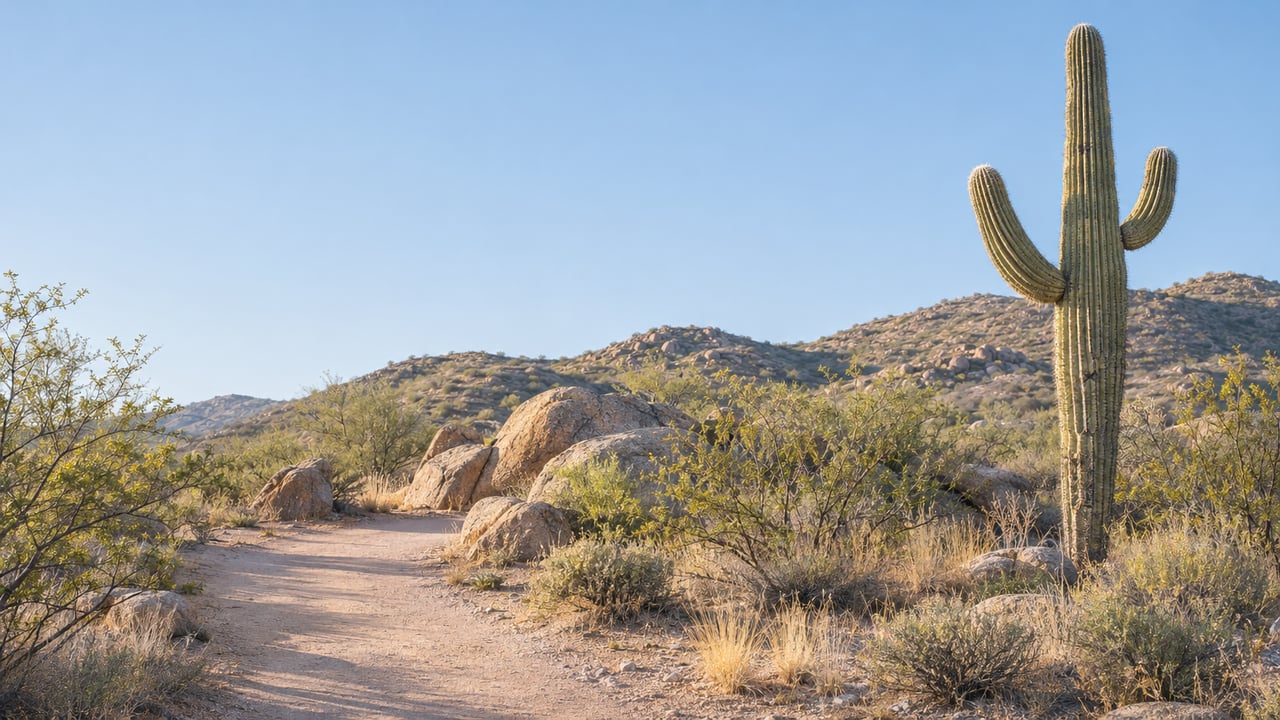
It is worth noting that Fountain Hills is not flat. Some routes are casual and approachable, while others are steep and more demanding. For example, the town labels the Western Loop Trail as extremely difficult with steep elevation change.
That is helpful context if you are relocating from a flatter area. The reward is the scenery and the strong sense of being in the landscape, but the terrain is a real part of everyday life here. If views matter to you, that topography is often part of why Fountain Hills feels so distinctive.
Parks support active routines
The outdoor lifestyle here is not limited to hiking. Golden Eagle Park is a 25-acre recreation area with ballfields, basketball, sand volleyball, tennis, playgrounds, and other amenities. The town also highlights Four Peaks Park as a 15-acre active park with pickleball, tennis, soccer, ballfields, and playgrounds on its parks overview.
That gives you more than just scenic recreation. You also get spaces for organized sports, casual games, and day-to-day activities that fit a range of ages and interests. If you are comparing Fountain Hills with places that feel more resort-like than residential, this is an important distinction.
Dark skies add another layer
One of the more overlooked features of Fountain Hills is what happens after sunset. The town’s tourism office says Fountain Hills became a Dark Sky Community in 2018 through DarkSky International and describes it as one of only two international dark sky communities near a major metropolitan city.
That designation supports something residents often value but may not think to ask about at first. You are not just buying daytime scenery. You are also getting a community that places value on preserving nighttime views, with opportunities for stargazing and evenings outdoors in parks and patios.
For buyers who want a quieter desert setting without giving up metro access, this detail can be surprisingly meaningful.
The town feels active without feeling hectic
Fountain Hills is scenic, but it is not isolated in how it functions. The Community Center serves as a gathering place for civic, nonprofit, arts, and community events, and the town keeps a steady events calendar throughout the year.
Recurring events include Irish Fest, the Greening of the Fountain, Concerts on the Avenue, Music Fest, Fourth at the Fountain, Ballet Under the Stars, Movie in the Park, and the Turkey Trot. The Fountain Festival of Fine Arts & Crafts is also a major draw, with the tourism listing noting that it attracts up to 100,000 visitors annually.
This is one of the reasons Fountain Hills often feels lively in a measured way. There is enough going on to create rhythm and social energy, but the town still reads as more relaxed and spacious than denser parts of Scottsdale or Phoenix.
Who tends to like living here
The data points to a community that is relatively mature and strongly owner-occupied. The U.S. Census QuickFacts page for Fountain Hills lists a 2024 population estimate of 23,696, a median age of 58, an owner-occupied housing rate of 84.4%, a median owner-occupied home value of $622,900, and a median household income of $112,654.
In practical terms, that suggests Fountain Hills may appeal to buyers looking for a quieter, more established setting rather than a dense urban environment. It can make sense for people seeking strong scenery, an outdoor lifestyle, and a community where ownership is a defining part of the housing profile.
If you are relocating, this is the kind of town worth considering when you want desert views and breathing room while still staying connected to Scottsdale and the broader Valley.
What daily life can feel like
On a normal week, daily life in Fountain Hills may look simpler than in faster-paced parts of metro Phoenix. You might start the day with a walk near the lake, use the trailheads on the weekend, meet friends at a local event, or enjoy the mountain backdrop from home as the light changes through the day.
The town’s layout, open space, and elevation changes all contribute to that experience. It feels visually connected to the desert in a way that many flatter suburban areas do not. That difference is hard to capture on a map, but easy to notice once you spend time there.
If you are trying to decide whether Fountain Hills fits your move, it helps to look beyond the fountain itself. The bigger story is how views, parks, trails, events, and location all work together to shape everyday life.
If you want help comparing Fountain Hills with other East Valley and Scottsdale-area communities, Sara Weller Real Estate can help you narrow down the right fit and make your move with more clarity and less stress.
FAQs
How close is Fountain Hills to Scottsdale and Phoenix?
- According to the town’s community profile, Fountain Hills is about 15 minutes from Scottsdale and about 28 minutes from Phoenix Sky Harbor Airport.
Is Fountain Hills only known for the fountain?
- No. In addition to the fountain, the town offers parks, trailheads, public art, community events, and dark-sky viewing that shape daily life.
Are there good trails in Fountain Hills?
- Yes. The town highlights major trail access from the Golden Eagle and Adero Canyon trailheads, with routes connecting to the McDowell Mountains and surrounding preserve areas.
Is Fountain Hills a good fit for buyers who want a quieter lifestyle?
- Census and town profile data suggest Fountain Hills appeals to buyers looking for an established, owner-occupied community with scenic views and outdoor amenities.
What makes Fountain Hills feel different from other Valley communities?
- Its hillside terrain, mountain views, dark-sky designation, signature fountain, and strong connection to parks and open space give it a more spacious desert setting.